Design Hotel by the Old Harbor
Strongest on location — the walkable 101 district puts the food scene and harbor at your door. Tradeoff: city rooms run compact; views cost extra.
Waterfalls, geothermal lagoons and northern lights — the great dramatic gesture of couples' travel
These visuals focus on room feel, atmosphere and those paired details that photos of landmarks miss.


Iceland is the trip couples take when they want the landscape to do the talking. Waterfalls you can walk behind, black-sand beaches, geothermal water steaming out of the earth, and — for half the year — the aurora borealis as a nightly lottery ticket. It's not a relaxing destination in the beach sense; it's an astonishing one, and the awe is shared, which is the point.
The couples' version of Iceland is built on contrasts: drive through volcanic emptiness by day, then soak in hot water under a cold sky by night. Reykjavík makes a charming, walkable base — coffee culture, design shops, a food scene that has quietly become excellent — while the Golden Circle and the south coast deliver the greatest-hits scenery within day-trip range. Add a night or two out along the coast under dark skies and the trip gains its second act.
Two honest notes: Iceland is expensive — budget accordingly and book accommodation early for summer — and the weather is a character in the story, not a backdrop. Couples who pack layers and hold plans loosely have the best time here; the ones who fight the forecast lose. Either way, it's the rare destination that sends you home with a shared vocabulary: that waterfall, that lagoon, that night the sky turned green.
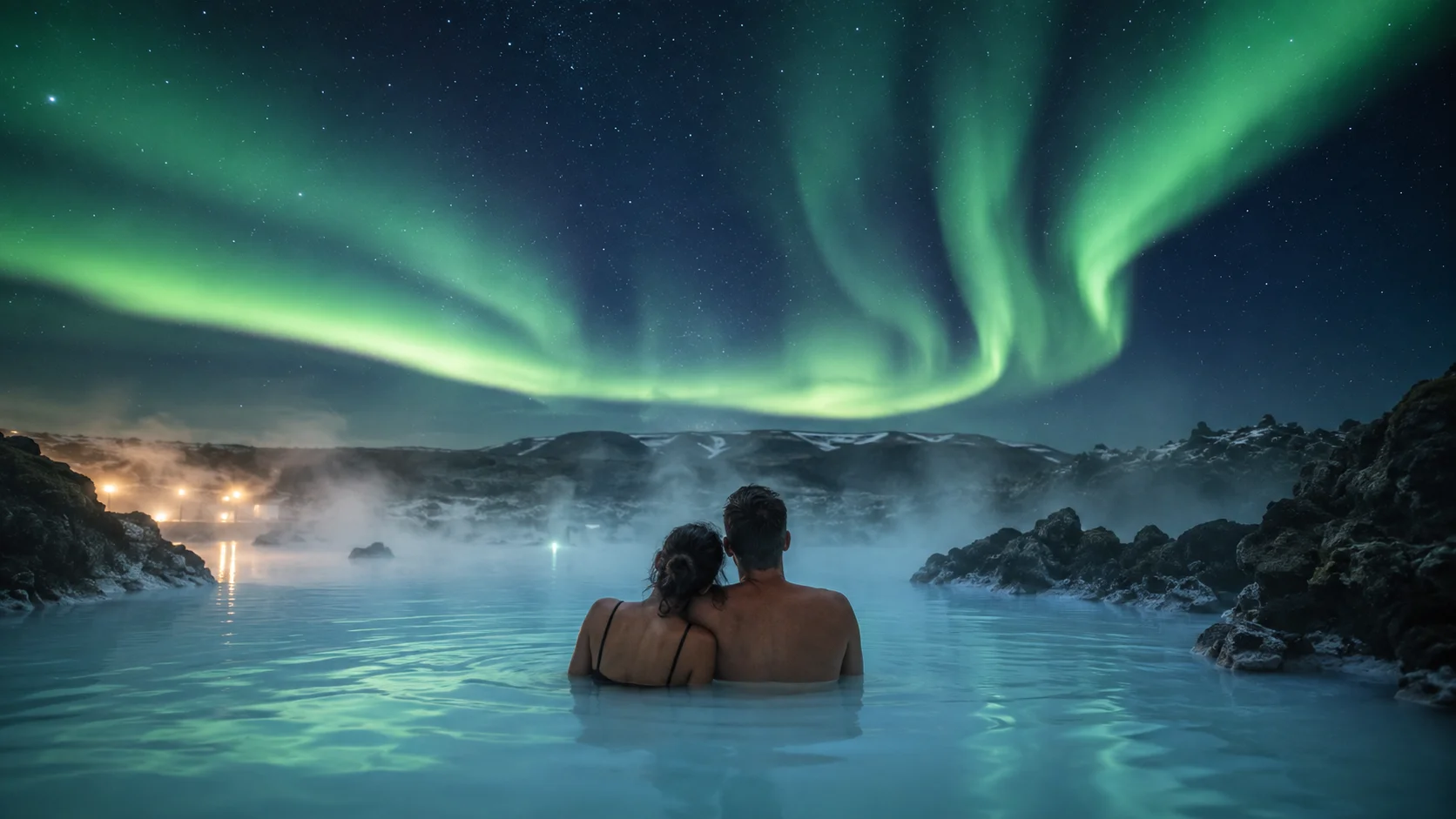
Þingvellir's continental rift, Geysir's eruptions and Gullfoss's double cascade in one loop — finished, crucially, with a countryside hot-spring soak instead of a highway sprint home.
The Blue Lagoon is the icon; the Secret Lagoon at Flúðir is the quiet local counterpart. Doing one (or both) together is Iceland's essential couple's rite.
September through March, clear dark nights offer the northern lights. The couples' method: rent a car, check the forecast, drive out of town lights, and wait with a thermos.
Basalt columns, roaring Atlantic and volcanic sand near Vík. Dramatic beyond photographs — respect the sneaker waves and keep well back from the water.
The south coast's twin waterfall giants: one you walk behind (bring the rain shell), one you climb beside. Golden hour turns both cinematic.
Humpbacks and minkes summer in Faxaflói Bay, minutes from the old harbor — a gentle half-day that pairs perfectly with a harbor-side dinner.
Best overall, best splurge and best value. Use these before you open listings — they set the right expectations.
Strongest on location — the walkable 101 district puts the food scene and harbor at your door. Tradeoff: city rooms run compact; views cost extra.
Strongest on romance and privacy: a private hot pot under a dark sky is the whole Iceland fantasy in one amenity. Tradeoff: you'll want the rental car.
Strongest on value in an expensive country — Iceland's guesthouses are warm, spotless and half the hotel rate. Tradeoff: romance comes from the country, not the room.
We score each editorial pick on the five things that most change how romantic a stay actually feels in person.
Example: 9.1/10 means the stay offers standout privacy, atmosphere and location for its tier.
Affiliate disclosure: Hosting Lovers may earn a commission when you book through our links — at no extra cost to you.
Browse real-time availability and prices from Booking.com, Expedia, Vrbo and more — all on one map.
Iceland runs two seasons, both romantic in opposite ways. Summer (June–August) brings the midnight sun, every road open, waterfalls at full flow — and peak prices with no auroras. Winter (November–February) trades daylight for northern lights, ice caves and steam-in-the-snow lagoon sessions. The clever windows are the shoulders: September and October offer dark-enough nights for auroras with autumn colors and manageable roads, while March adds lengthening days to late-winter aurora odds. Whatever the month, build one flexible evening into every itinerary — when the aurora forecast lights up, everything else should cancel.
Best for food, walkability and first visits.
The charming, compact capital core.
Best for hot-tub cottages and aurora skies.
Selfoss and Flúðir make handy bases.
Best for waterfall-and-beach immersion.
Remote, dramatic, worth one or two nights.
Land, soak at the Blue Lagoon on the way in (book the slot ahead), then an easy Reykjavík evening — harbor walk, one great dinner.
Golden Circle day: Þingvellir early, Geysir, Gullfoss — then the Secret Lagoon as the golden-hour finale before a countryside cottage night.
South coast: Seljalandsfoss, Skógafoss, Reynisfjara's black sand, and back — or a second cottage night with the aurora app open.
This is where we get practical about what to splurge on and what to skip.
A countryside stay with a private hot tub for at least one night — it converts Iceland's two greatest assets, geothermal water and dark sky, into a private amenity.
Skip cramming the whole Ring Road into under a week. The rushed version trades awe for windshield time; the south coast plus Golden Circle is the right-sized couples' trip.
Iceland's costs surprise even prepared travelers — restaurant dinners and fuel add up fast. Guesthouses, grocery breakfasts and one splurge dinner beat mid-tier everything.
Line this up early when arrival simplicity matters.
Often worth it for countryside and coastal regions.
Most important on costlier or international trips.
Useful when maps, rideshares and restaurant searches matter daily.