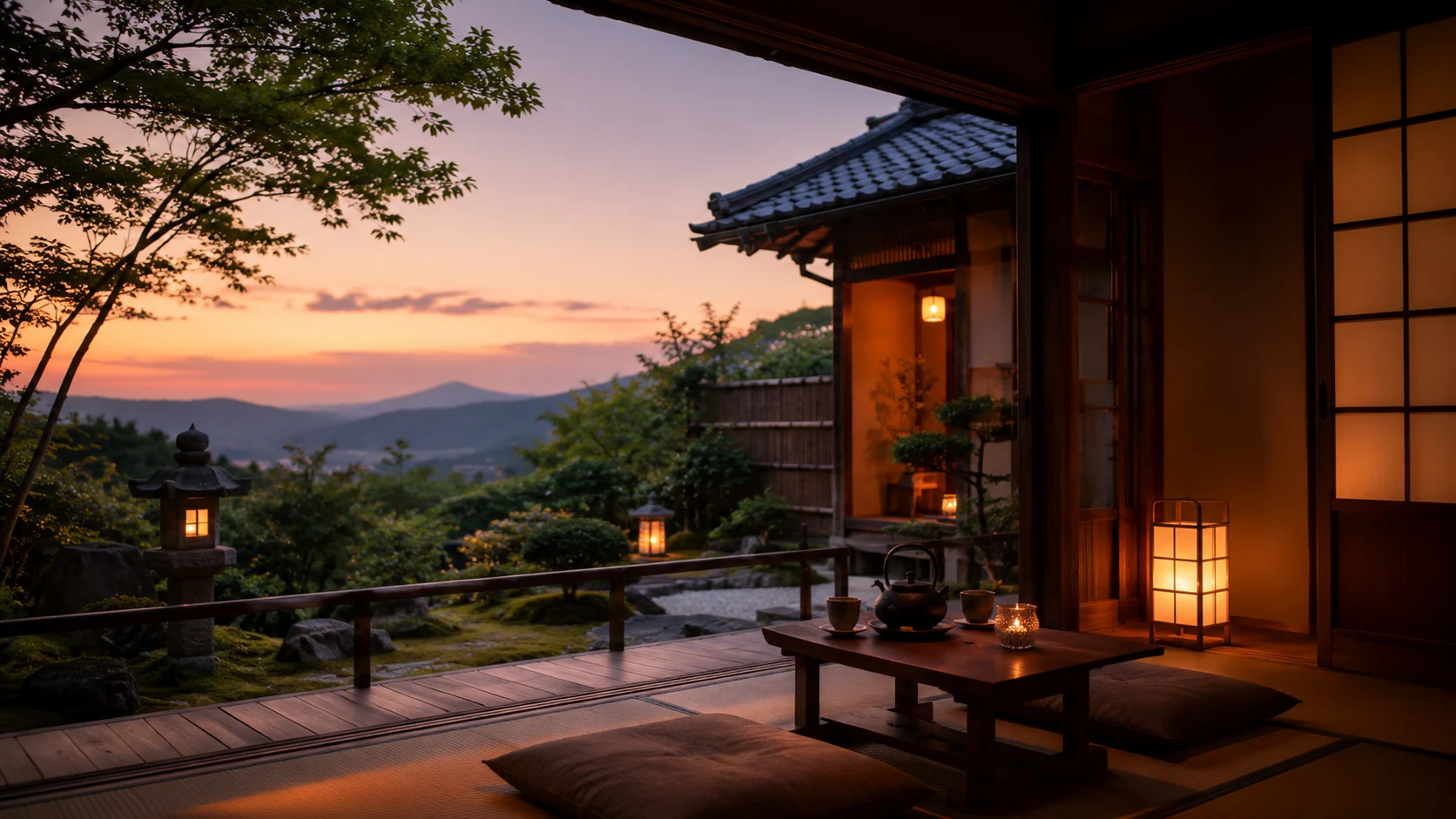
Garden-View Ryokan Room
Strongest on privacy and romantic atmosphere. Tradeoff: couples amenities is a little softer than the rest.
Temples, tea houses, and the kind of quiet that brings you closer
These visuals focus on room feel, atmosphere and those paired details that actually signal romance.


Kyoto is romance at the speed of a poem. A thousand shrines and temples, geisha-era tea houses tucked down cobbled lanes in Gion, bamboo forests that sound like the wind speaking, and a culture that has turned everything — tea, food, garden design, even silence — into a kind of quiet art form.
Base yourselves at a ryokan (traditional inn) for at least one or two nights — tatami floors, a private onsen bath, a kaiseki dinner served in your room, and futons laid out while you're eating. Philosophy is everywhere: the Philosopher's Path, the raked-gravel gardens at Ryōan-ji, the hushed walk through Arashiyama's bamboo grove at dawn.
Spring cherry blossoms and fall momiji (red maples) are famously beautiful — and famously crowded. The shoulder weeks and winter Kyoto (with snow on the golden pavilion) are criminally underrated and much more peaceful for couples who want space.
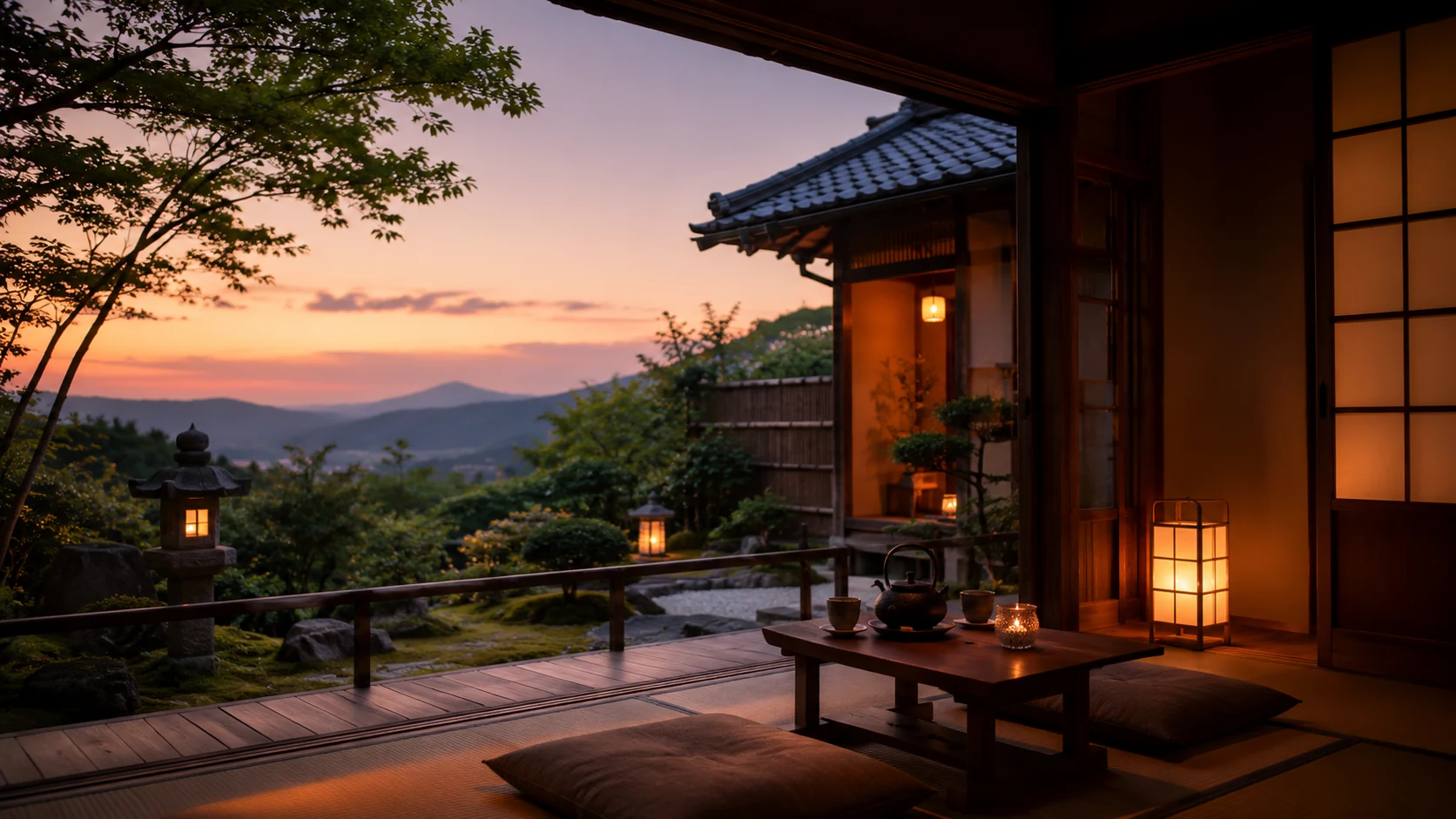
The bamboo grove is magical — but only if you beat the tour buses. Get there at sunrise.
10,000 red torii gates climb the mountain. Go after dark when they're lantern-lit and empty.
Book a small ceremony in a century-old teahouse. Camellia and En are two of the best.
Traditional inn with an in-room cypress bath. Kaiseki dinner, sake, and absolute calm.
A canal-side walking trail lined with cherry trees. Gorgeous in bloom, peaceful year-round.
Narrow lantern-lit streets, geisha hurrying to appointments, tea houses behind sliding wooden doors.
Best overall, best splurge and best value. Use these before you open live rates.
Strongest on privacy and romantic atmosphere. Tradeoff: couples amenities is a little softer than the rest.
Strongest on privacy and romantic atmosphere. Tradeoff: value is a little softer than the rest.
Strongest on location and romantic atmosphere. Tradeoff: privacy is a little softer than the rest.
We score each editorial pick on the five things that most consistently determine whether a romantic stay feels worth it.
Example: 9.1/10 means the stay offers standout privacy, atmosphere and location, with only minor tradeoffs.
Affiliate disclosure: Hosting Lovers may earn a commission when you book through selected accommodation and activity links. It never changes your price.
Browse real-time availability and prices from Booking.com, Expedia, VRBO, and more.
A 3-hour guided walk threads together everything that makes Arashiyama worth the trip: the Sagano Bamboo Forest, Togetsukyō Bridge, Tenryu-ji Temple's UNESCO-listed Zen garden, the Okochi Sanso Villa, and the illuminated Kimono Forest — with a local guide filling in the history. Go early; the bamboo grove is a different place before the tour buses arrive.
Late March through mid-April (cherry blossoms) and late October through November (red maples) are the iconic seasons — and the most crowded. Early March, late April, and late November/early December are the stealth best times. Winter is magical and quiet.
Best for classic Kyoto atmosphere and temple-lined walks.
Beautifully atmospheric, especially early and late.
Best for iconic imagery, teahouse lanes and central positioning.
Famous for a reason, but popular.
Best for a softer pace and scenic nature access.
More restful and a little farther out.
Best for convenience and train-heavy itineraries.
Practical rather than deeply romantic.
Check in, tea and a quiet neighborhood walk at dusk.
Arashiyama or eastern temples, downtime at the inn, then a multi-course dinner.
One last garden or market visit and a clean onward train departure.
This is where we get practical about what to splurge on, what to skip, and what actually matters once you arrive.
Spend extra where the room position changes the entire feel of the trip.
Skip the busy core if privacy and quiet evenings matter more than walkable nightlife.
Beautiful photos can hide room size, stair counts and sight lines. Read the room-type details.
Line this up early when arrival simplicity matters.
Often worth it for countryside and coastal regions.
Most important on costlier or international trips.
Useful when maps, rideshares and restaurant searches matter.